(and how his story brushes against the Monster of Florence)
Legal note
This article is based entirely on publicly available sources: official documents, major news outlets, and standard reference works. All suspects and persons named in connection with these crimes must be considered innocent unless proven guilty in court. The links sometimes suggested between the Zodiac Killer and the Monster of Florence are hypotheses only, not accepted judicial facts.
© Mirko Francesconi. Original work. All rights reserved.
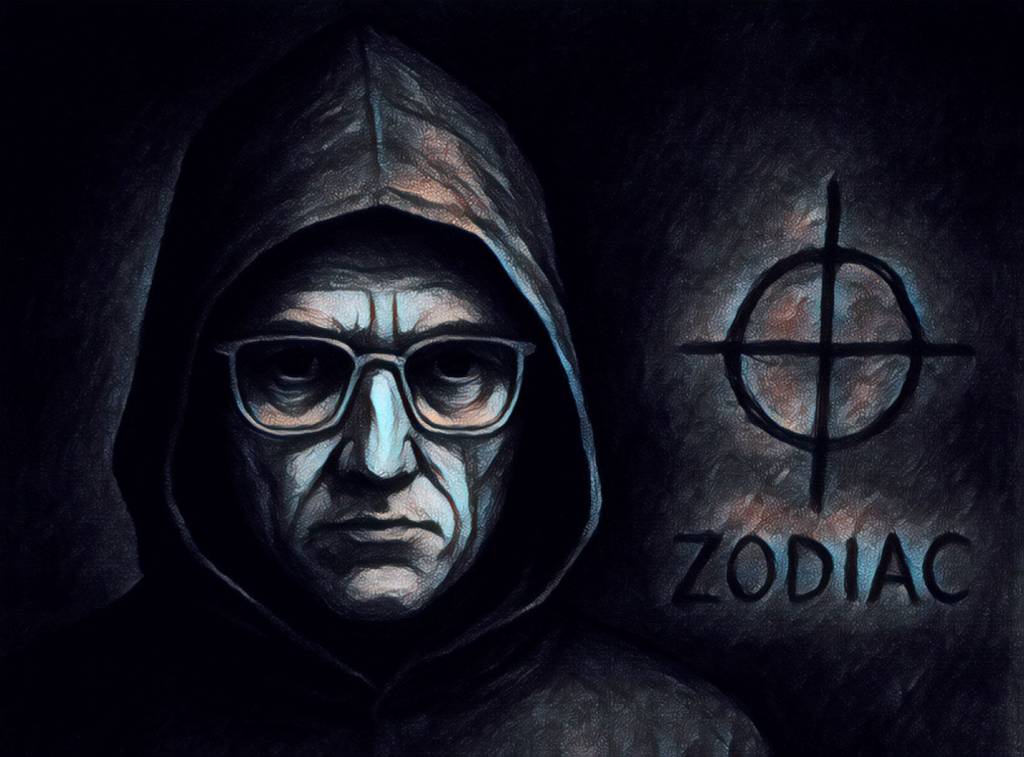
1. A cold case that defined an era
The Zodiac Killer is the nickname given to an unidentified serial killer who operated in Northern California—mainly around the San Francisco Bay Area—between 1968 and 1969, with later letters extending into the mid-1970s. At least five murders are officially attributed to him, along with two surviving victims who provided crucial testimony.
What makes the case unique is not just the violence, but the killer’s public performance:
- he named himself “Zodiac” in letters sent to newspapers,
- used a crosshair-like symbol as his signature,
- mailed cryptograms and taunts to the press and police,
- and claimed a much higher number of victims than investigators could ever verify.
Decades later, the case remains officially unsolved. The FBI and local agencies have closed and reopened various lines of inquiry over time, but no one has ever been charged as the Zodiac. Federal Bureau of Investigation
2. The confirmed attacks
Investigators generally agree on four main attacks linked to the Zodiac, involving seven known victims.
Lake Herman Road – December 20, 1968
- Location: A remote road between Benicia and Vallejo, California.
- Victims: High-school students David Faraday (17) and Betty Lou Jensen (16), on their first date.
- Facts: The couple parked in a lovers’ lane area. A vehicle pulled up; the attacker fired a .22 caliber weapon, killing Faraday with a close-range shot to the head and Jensen with multiple shots as she tried to flee. There was no robbery or sexual assault—only execution-style gunfire.
At the time, the murder was treated as a stand-alone case. Only later would it be folded into the Zodiac series.
Blue Rock Springs – July 4–5, 1969
- Location: Parking area at Blue Rock Springs Park near Vallejo.
- Victims: Darlene Ferrin (22) and Michael Mageau (19).
- Facts: A man approached their parked car, shone a flashlight into the interior, and then fired multiple rounds with a 9 mm handgun. Ferrin died; Mageau survived despite serious injuries and later gave a description of the attacker.
About 40 minutes after the shooting, a man phoned the Vallejo Police Department, calmly claiming responsibility for this attack and the Lake Herman Road murders. That call created the first official link between the two crime scenes.
Lake Berryessa – September 27, 1969
- Location: A secluded area on the shore of Lake Berryessa, Napa County.
- Victims: Bryan Hartnell (20) and Cecelia Shepard (22).
- Facts: A man wearing an unusual hood and a bib-style garment marked with a circle-cross symbol approached the couple, initially pretending to be an escaped convict needing their car. He tied them up and stabbed them repeatedly. Shepard later died in the hospital; Hartnell survived and gave a detailed account of the attack.
Before leaving, the attacker wrote on Hartnell’s car door:
- the dates of the previous attacks,
- the location “Vallejo,”
- and the same circle-cross symbol later used in letters.
San Francisco – The Paul Stine murder – October 11, 1969
- Location: Presidio Heights neighborhood, San Francisco.
- Victim: Paul Stine (29), a taxi driver.
- Facts: Stine picked up a fare who asked to be taken to a residential address. The passenger shot him once in the head with a 9 mm handgun, then took a piece of Stine’s bloody shirt and left the scene on foot.
A confusing police response and a misreported suspect description allowed the killer to slip away—possibly even walking close to responding officers. Days later, the San Francisco Chronicle received a letter containing a piece of Stine’s shirt, proving that the person who wrote it was the killer.
That letter was the first clear point where the media, the police, and the public understood they were dealing with a serial killer who wanted to be seen.
3. Letters, symbols, and ciphers
From July 1969 to January 1974, Bay Area newspapers and individuals received a series of letters written in a distinctive, erratic block print. Many began with the now-infamous line: “This is the Zodiac speaking.”
Key elements of this correspondence:
- The “Zodiac” name and symbol:
In early letters, the killer adopted the name “Zodiac” and began signing with a circle crossed by a vertical and horizontal line, similar to a rifle scope. - The Z408 cipher (1969):
Sent in three parts to different newspapers on July 31, 1969, the 408-symbol cipher was solved within days by a California schoolteacher and his wife. The decoded message described the pleasure of killing and suggested that victims would become “slaves” in the afterlife, but it did not reveal any real identity. - The Z340 cipher (1969), solved in 2020:
On November 8, 1969, the “340-character” cipher reached the San Francisco Chronicle. It baffled experts for half a century. In 2020, an international team of private cryptographers finally cracked it using custom software and extensive computational testing. The FBI later confirmed the solution. The message taunted authorities and denied that the Zodiac had ever appeared on a TV talk show—but again, it did not contain a name. - Shorter unsolved ciphers (Z13, Z32):
Later letters included two smaller codes: one supposedly hiding the killer’s name and another linked to a claimed bomb plot. Both remain officially unsolved, and many researchers suspect they may be too short or deliberately misleading to decode with certainty. - Body count claims:
In various letters, the Zodiac claimed to have killed many more people than the five officially recognized victims—at one point writing that his total had reached 37. No independent evidence has ever confirmed that number, and investigators remain cautious about attributing additional murders to him.
After a final cluster of letters in 1974, including one commenting on the movie The Exorcist, the authenticated correspondence abruptly stopped. Whether the killer died, was imprisoned on another charge, or simply retired from public taunting remains unknown.
Leggi anche:
Sulle tracce del Mostro di Firenze
4. The investigation and the main suspects
The Zodiac investigation involved multiple agencies: local police departments in Vallejo, Napa, and San Francisco, plus the California Department of Justice and the FBI.
Over the decades, dozens of individuals have been proposed as the Zodiac—but only one was ever publicly named as a major suspect by law enforcement:
Arthur Leigh Allen
- A former elementary school teacher and convicted sex offender who lived in the Bay Area.
- Allen owned weapons, had a history of disturbing behavior, and reportedly made comments about wanting to hunt people.
- Several circumstantial details seemed to fit, and he was extensively investigated in the 1970s and again in the 1990s.
However:
- Handwriting experts did not find his writing to match the Zodiac letters.
- Fingerprints and palm prints recovered during the investigation did not conclusively tie him to the case.
- After Allen’s death in 1992, DNA comparisons using material from letters (where usable) did not confirm him as the Zodiac.
Because of these gaps, authorities have never declared Allen—or anyone else—the definitive Zodiac. The FBI describes the case as officially unsolved, with evidence preserved in case of future breakthroughs.
Other suspects, ranging from local men to high-profile names, have been promoted by authors, journalists, or internet sleuths. None of those identifications has been accepted by law enforcement as conclusive. For legal and ethical reasons, this article does not endorse any specific living or recently deceased individual as the Zodiac.
5. Zodiac’s place in American crime history
Even with a relatively small number of confirmed victims compared to other serial killers, the Zodiac case occupies a central place in American true crime.
Reasons include:
- The public nature of the killer’s communication with the press.
- The enduring mystery of the ciphers and the possibility that some remain unsolved.
- The sense that the killer controlled the narrative, turning newspapers into his stage.
- The fact that he was never caught, making Zodiac a symbol of the limits of forensic science and traditional policing in the late 1960s.
Over time, Zodiac has inspired numerous books, documentaries, podcasts, movies (including David Fincher’s Zodiac), and endless online debates—feeding a culture of “armchair detectives” that still gravitates toward this cold case.
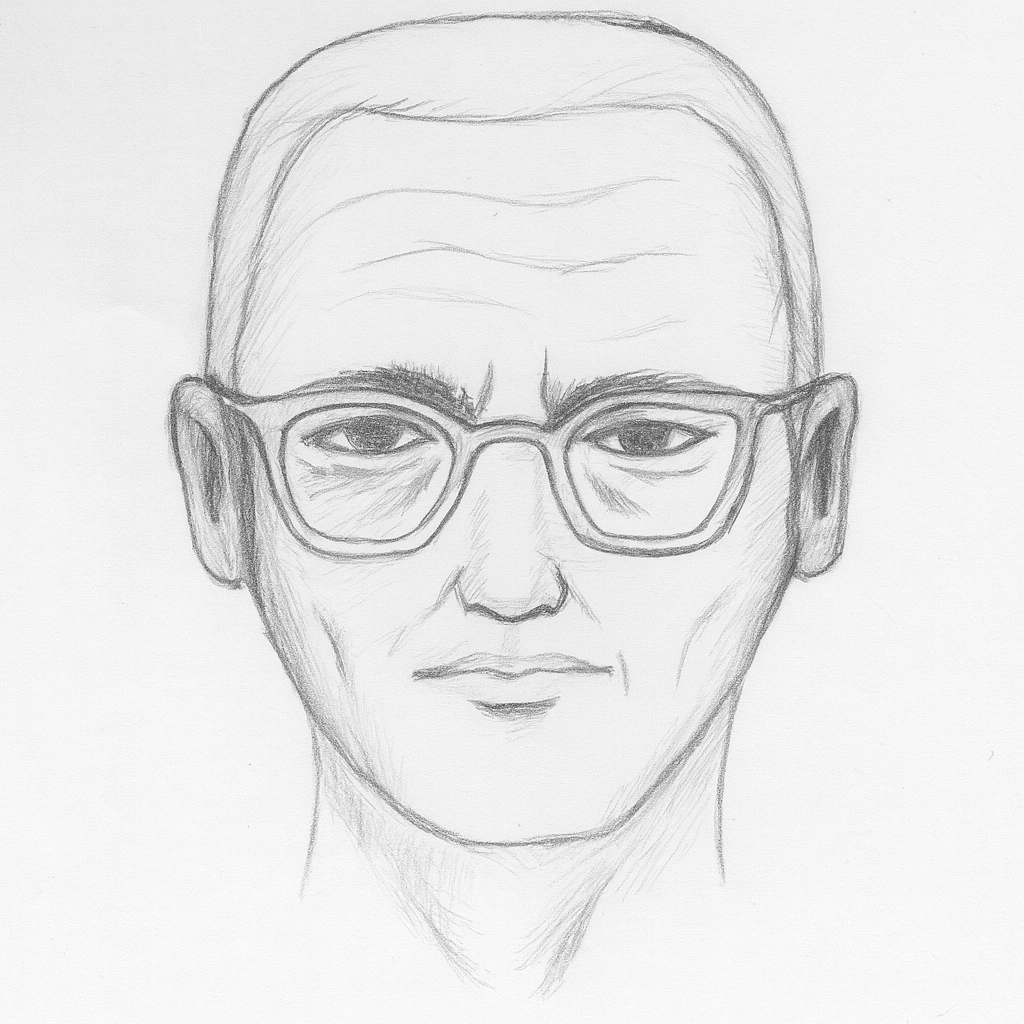
6. Zodiac and the Monster of Florence: parallels, theories, and reality
For anyone who’s familiar with the Italian case of the Monster of Florence, it’s natural to ask: do these two “monsters” of crime history really intersect?
6.1. Documented similarities
Researchers who study serial homicide have noticed that out of thousands of documented serial killers, only a small number primarily targeted young couples in cars or lovers’ lanes. Among those few are:
- the Zodiac Killer (Northern California),
- the Monster of Florence (Tuscany, Italy),
- David Berkowitz (“Son of Sam”),
- and the German “Couples Killer” Werner Boost.
In both the Zodiac and Monster cases:
- many victims were couples seeking privacy in parked cars,
- the initial attack often involved a handgun,
- at least some crimes occurred in rural or semi-isolated areas,
- and the identity of the killer (or killers) remains officially unresolved.
These parallels have fueled comparisons in books, articles, and documentaries.
6.2. Crucial differences
Despite the surface similarities, there are important differences between the two series:
- Geography and culture
- Zodiac operated in late-1960s California, around San Francisco, Vallejo, and Napa.
- The Monster of Florence case unfolded in the hills outside Florence between 1968 and 1985, in a very different social and investigative context.
- Time frame
- Zodiac’s confirmed period of activity is relatively compact: mainly 1968–1969, plus letters to 1974.
- The Monster series spans more than 15 years, with eight double homicides (16 victims) officially attributed to him.
- Modus operandi
- Zodiac used different weapons and methods (shootings and stabbings), attacked both couples and a lone cab driver, and focused heavily on letters and media manipulation.
- The Monster attacks consistently involved a .22 caliber Beretta pistol with distinctive ammunition, often followed by post-mortem mutilation of female victims, but without the kind of letter campaign seen in the Zodiac case.
- Communication style
- Zodiac directly contacted newspapers and individuals, repeatedly, over years.
- The Monster of Florence case includes a few anonymous letters tied to the investigation, but nothing like the Zodiac’s ongoing, theatrical correspondence.
Because of these differences, many scholars view the two series as separate phenomena that happen to share certain patterns typical of “lovers’ lane” killers.
6.3. The “same killer” hypothesis
Despite the gaps, some commentators have suggested that one person might be behind both series. Major reference works note that this idea exists, but treat it as speculative—part of the mythology that has grown around both cases.
One of the most publicized modern versions of this theory comes from Italian journalist Francesco Amicone, who argued that an American man named Joseph “Joe” Bevilacqua could have been both the Zodiac and the Monster of Florence. According to Amicone:
- Bevilacqua, a U.S. serviceman, would have had the opportunity to travel between Vietnam, California, and Italy during the relevant years.
- He allegedly could have accessed evidence from an early Florence murder and manipulated ballistic traces to link that crime to later killings.
- Amicone claimed to have obtained a kind of confession from Bevilacqua and later announced that Bevilacqua’s DNA profile had been sent to U.S. authorities dealing with the Zodiac case.
However, Italian courts have taken a very different view:
- In December 2024, a court in Florence convicted Amicone of defamation against Bevilacqua’s family.
- In the written judgment, the judge described the “Zodiac – Monster of Florence” unification as a bizarre theory rejected by “qualified investigative circles.”
As of now:
- No law-enforcement agency has publicly confirmed any DNA match or hard forensic link between Zodiac evidence and the Monster of Florence investigations.
- Bevilacqua, who died in 2022, was never convicted of any of the Zodiac or Monster murders.
- The idea that one man committed both series remains, in the words of mainstream sources, a suggestive but unproven hypothesis, not an established fact.
For a website focused on serious true crime, the safest position is clear:
Zodiac and the Monster of Florence are two distinct unsolved cases.
Any claimed link between them should be presented explicitly as a theory, not as a conclusion.
7. Why Zodiac still matters today
The Zodiac Killer case sits at the crossroads of old-school detective work and the beginnings of forensic and media-driven investigation:
- It shows how a killer could exploit newspapers and public fear long before social media.
- It highlights the early limits of forensic science, which at the time lacked modern DNA tools.
- It continues to challenge today’s investigators and codebreakers, who revisit letters and ciphers with new technology and fresh eyes.
When placed alongside the Monster of Florence, Zodiac becomes part of a broader, unsettling pattern: a handful of lust-driven killers who hunted young couples in secluded spots, leaving behind not only grief, but also decades of unanswered questions.
Main institutional sources
- FBI – The Zodiac Killer (FOIA Vault files).
FBI Records: The Vault – The Zodiac Killer, Parts 01–06. FBI - FBI news release on the case and ciphers.
“The Zodiac Killer.” FBI News Story, 2 March 2007. Federal Bureau of Investigation - FBI statement on the solution of the 340-character cipher.
Coverage summarizing the FBI confirmation that a cipher attributed to the Zodiac Killer was solved by private citizens (2020). The Register - Encyclopaedia Britannica – Zodiac killer.
“Zodiac killer | Name, Never Caught, Letters, Suspects, & Facts.” Encyclopedia Britannica
On the Monster of Florence & the alleged Zodiac link
- Overview of the Monster of Florence case.
“Monster of Florence.” Encyclopedic article, updated 2025. Wikipedia - On Francesco Amicone’s theory and the court ruling.
- Summary of Amicone’s claims about Joe Bevilacqua and the Zodiac/Monster connection, plus details of the 2024 Florence defamation conviction and the judge’s description of the theory as a “bizarre” hypothesis denied by qualified investigators. Zodiac
- Background reading on Bevilacqua and the journalistic debate.
Articles and posts collected on the site Zodiac, il Mostro (Ostellovolante), including coverage of Bevilacqua’s testimony and later media reactions. Zodiac
©Mirko Francesconi
If you’ve made it this far, it means this case has hit you at least as hard as it’s hit me.
On this page I’ve gathered the timeline, the official leads, and some lesser-known theories, in an effort to keep alive the memory of a story that’s in danger of being forgotten.
Read also:
Il Caso di Antonella Ghetti
Il Mostro della Luna Piena
Got something to tell me? Write to: casi.reali@virgilio.it
 Mirko Francesconi: il Tuo autore
Lascia un commento